Open Science Workshop Explores Human-Environment Interactions
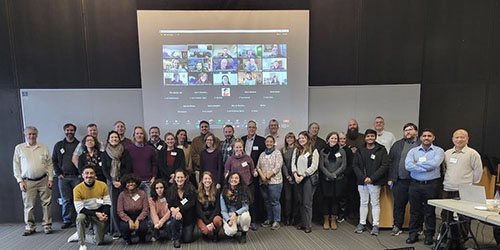
NASA's Socioeconomic Data and Applications Center (SEDAC), in collaboration with NASA's Transform to Open Science (TOPS) initiative, hosted an open science workshop for the community researching human-environment interactions. Held at the Lamont Campus of Columbia University on January 9, 2024, the workshop brought together 65 scientists from many disciplines with an interest in how to apply open science approaches to the highly interdisciplinary study of the human aspects of global environmental change. Open science is a movement that includes producing open data, using open-source software tools, publishing computer code openly, and publishing research in open access journals. Presenters showcased work on topics ranging from climate impacts on demographic processes, the integration of field data with remote sensing data, and the collaborative development of a fully open administrative boundaries dataset (which is a prerequisite to data integration across the Earth and social sciences). Key challenges identified in the workshop were limitations in financial and human resources, data accessibility and interoperability, the appetite for learning new practices, the willingness to share imperfect or poorly documented code and datasets, and concerns over sensitive information. Open science is not always the least expensive path to generating new knowledge, so it could reinforce existing inequalities in lower-resource settings. Important workshop takeaways include the need for sustaining open science funding and democratizing its initiatives, establishing initiative governance, reducing barriers to adoption, ensuring inclusivity, and addressing ethical considerations. Participants suggested that the next iteration of the SEDAC Open Science workshop should focus on putting open science data to work by involving more front-line stakeholders and decision-makers, possibly with a focus on low-income countries. There may also be potential for a workshop collaborating with U.S.-based end users of data, including public and private sector decision-makers, to better document and understand how open science principles and approaches can improve decision-making. The workshop was organized by SEDAC Assistant Systems Engineer Kytt MacManus, SEDAC Manager Dr. Alex de Sherbinin, and SEDAC Senior Staff Associate Antoinette Wannebo.
See:
The workshop report, a video of the workshop, and all presentations are openly available on Zenodo
Earthdata: Open Science Workshop Explores Human-Environment Interactions
|